
Views: 220 Author: shenghuiadhesive Publish Time: 2025-10-29 Origin: Site


Content Menu
● Adhesive chemistry and bonding mechanisms
● Particle size compatibility and distribution
● Moisture tolerance and water resistance
● Thermal stability and curing behavior
● Mechanical performance and durability
● Chemical compatibility with minerals
● Environmental considerations and safety
● Processability and mixability
● Application methods and dosing strategies
● Environmental and regulatory considerations
● Case studies and industry applications
● Selecting an adhesive: a practical approach
● Environmental lifecycle and end-of-life considerations
● Future trends in briquetting adhesives
● Practical tips for operators
● FAQs
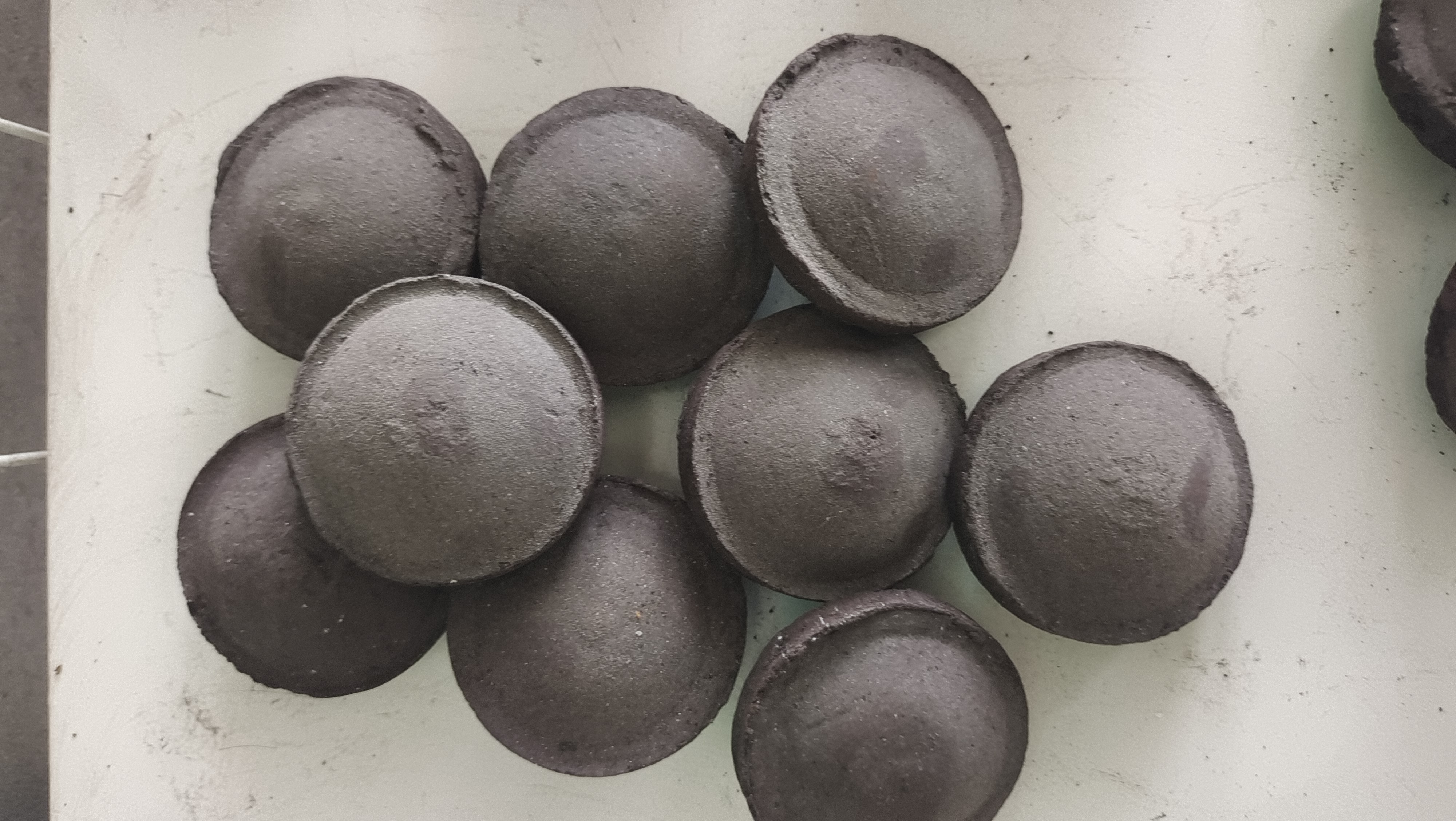
Mineral powder briquetting is a widely used process in the mining and materials industries, where fine mineral powders are converted into dense, manageable briquettes. An essential component of this process is the adhesive that bonds mineral particles together during briquetting. The right adhesive can significantly influence briquette strength, durability, and resistance to moisture, while the wrong choice can lead to weak briquettes, dusting, and poor handling characteristics. This article explores the key characteristics of mineral powder briquetting adhesives, explaining how formulation, performance under various conditions, and compatibility with different mineral powders determine overall briquetting success.
Adhesives used in mineral powder briquetting are typically formulated to create interparticle bonds that withstand the mechanical pressures of briquetting and subsequent handling. The primary bonding mechanisms include mechanical interlocking, chemical bonding, and hydrogen bonding. Some adhesives rely on the formation of covalent or ionic bonds with mineral surfaces, while others create a polymeric network that entraps particles and distributes stress evenly across the briquette.
In many mineral systems, polymeric binders such as starch-based binders, cellulose derivatives, synthetic polymers, or natural polymers are used. The choice of polymer affects elasticity, toughness, and water resistance. A good adhesive system balances stiffness and flexibility so that briquettes can resist fragmentation under load while maintaining integrity when subjected to abrasion or impact during transport and storage.
The particle size distribution of mineral powders influences how well an adhesive can interlock and form a cohesive briquette. Fine powders have a high surface area and can form strong interparticle contacts with proper wetting, but they may also be prone to dusting and plastic deformation if the adhesive is not optimized. Coarser powders benefit from binders that promote bridging between larger particles while filling voids efficiently.
An effective mineral briquetting adhesive should exhibit good wetting properties so that it coats particle surfaces uniformly. It should also promote plasticity at the pressing temperature, enabling the powder bed to deform and consolidate without cracking. Compatibility with a range of particle sizes reduces the risk of weak spots within the briquette.
Moisture sensitivity is a critical consideration for briquettes used in humid environments or those exposed to rain, humidity, or groundwater. Some mineral briquetting processes generate briquettes with inherent moisture content, while others require external moisture addition for optimal binding. Adhesives must tolerate moisture without losing binding strength or becoming excessively tacky.
Water resistance is particularly important for briquettes intended for use in high-humidity or outdoor conditions, or where briquettes may encounter rain or condensation. Some adhesives form a hydrophobic film or crosslinked network upon curing, which reduces moisture ingress and improves durability. Balancing moisture resistance with processability ensures that briquettes dry reliably and achieve their target mechanical properties.
Briquetting often involves elevated temperatures during pressing, and curing or drying steps after formation. The adhesive must maintain its bonding capability across the temperature range encountered in production and use. Thermal stability prevents premature softening or degradation during pressing, which could weaken briquettes or cause shape loss.
Curing behavior is another important aspect. Some adhesives require chemical curing, while others cure through physical changes such as evaporation of water or solvent, reaching a hardened network. The curing rate should align with the production line speed and drying capacity. Slow curing can cause delamination, while overly rapid curing might trap stresses and produce internal cracks.
Briquettes must withstand mechanical stresses during handling, stacking, transport, and use. The adhesive contributes to briquette strength, hardness, and toughness. Key performance indicators include compressive strength, abrasion resistance, internal bonding strength, and resistance to chipping or cracking under impact.
Durability also encompasses long-term performance under cyclic loading and repeated humidity exposure. An adhesive with good aging characteristics will maintain its strength without significant creep, softening, or degradation. This translates into longer briquette life and reduced maintenance costs for downstream users.
Mineral powders vary widely in chemical composition, including silicates, oxides, carbonates, sulfides, and organic matter. An adhesive must be chemically compatible with the mineral surface to avoid competing reactions that could weaken bonding. Incompatibilities can lead to poor wetting, phase separation, or degradation of the adhesive network.
Some minerals may release moisture or reactive gases under certain conditions, which can interact with the adhesive. Therefore, a binder system that remains stable in contact with the specific mineral slurry is essential for consistent briquette quality. Compatibility testing with representative mineral samples is a standard practice in briquetting development.
The environmental profile of an adhesive is increasingly important in industrial applications. This includes the use of non-toxic, biodegradable, or easily washable components, as well as compliance with local environmental regulations. The safety of the adhesive during handling, mixing, and curing is also critical, particularly for operators who work with powders that can be inhaled or irritate the skin.
Adhesives designed for briquetting often emphasize low dust generation, minimal volatile organic compounds, and a clear disposal or recycling pathway. A responsible formulation reduces health risks for workers and minimizes environmental impact.
From the perspective of manufacturing, the adhesive must be easy to handle, mix, and meter into the briquetting process. This includes good distributive mixing with minimal lump formation, consistent viscosity across batches, and stable performance over a range of temperatures. The adhesive should remain usable over the expected storage period without premature thickening or separation.
Additionally, compatibility with existing briquetting equipment is important. The viscosity and tack of the adhesive should be suited to the type of briquetting press, whether it is roll-press, piston press, or hydraulic briquetting equipment. Easy cleaning and low residue on machinery help minimize downtime.
Economic factors often drive adhesive selection as much as technical performance. The total cost of ownership includes raw material costs, processing requirements, energy consumption during drying and curing, and potential gains from longer briquette life and reduced breakage. Scalable formulations should deliver consistent results from pilot to full-scale production without requiring expensive equipment changes or specialized handling.
Leaning toward a binder system that achieves the required mechanical properties with minimal quantity can yield substantial cost savings. However, it is essential to verify that cost reductions do not compromise briquette performance under real-world operating conditions.
Adhesive application methods influence the distribution and effectiveness of bonding. Common strategies include coating powders before pressing, adding a binder solution to the powder mix, or applying adhesive directly to the briquetting die region. The choice depends on the equipment configuration, process speed, and the desired uniformity of binding.
Dosing accuracy is critical. Over-application may cause excess moisture, leading to sticking and handling issues, while under-application can produce weak briquettes. Process controls such as inline moisture sensors, rheology checks, and periodic quality testing help maintain consistent results.
To ensure consistent briquette performance, rigorous quality control measures are necessary. Typical tests include:
- Compressive strength and modulus
- Internal bonding strength
- Abrasion resistance
- Water absorption and wetting behavior
- Dimensional stability after drying and curing
- Thickness and surface finish uniformity
Qualitative observations, such as visual inspection of surface texture, cracks, and delamination, complement quantitative measurements. Establishing acceptance criteria for each property helps maintain product reliability across production batches.
Regulatory frameworks may mandate specific disclosures about chemical components, emissions, and end-of-life disposal. Compliance with local and international standards can influence binder selection. Producers should maintain documentation of material safety data sheets, batch records, and testing results to demonstrate conformity and facilitate audits.
Adhesives for mineral powder briquetting find applications across various sectors, including:
- Coal and coke briquetting for energy production
- Mineral fines briquetting for steelmaking processes
- High-density briquettes for cement and lime industries
- Refractory and ceramic material briquetting
- Metal oxide residues and industrial by-products briquetting
In each case, tailoring the adhesive system to the specific mineral composition, moisture level, and operating conditions yields the best performance. Case studies often highlight improvements in briquette strength, handling properties, and resistance to moisture or thermal cycling.
When evaluating adhesives for mineral powder briquetting, consider a step-by-step approach:
- Define performance targets: strength, moisture resistance, and aging behavior.
- Analyze mineral composition and particle size distribution.
- Assess processing capabilities: pressing temperature, drying capacity, and equipment type.
- Evaluate environmental and safety requirements.
- Conduct pilot-scale trials to compare candidate binders under controlled conditions.
- Implement a monitoring plan with QC tests aligned to product specifications.
This structured method helps identify an adhesive system that delivers reliable performance and supports scalable production.
Even experienced briquetting operators can fall into common pitfalls. Over-reliance on a single binder without thorough compatibility testing can lead to unexpected failures when the mineral mix changes. Underestimating the impact of moisture or improper curing can cause briquette cracking or delamination. Inconsistent application or poor mixing can create weak zones within briquettes, reducing overall durability.
A proactive approach includes continuous improvement cycles, where feedback from production, quality control, and end users informs binder formulation adjustments. Regular re-evaluation helps maintain briquette performance in the face of evolving input materials and market demands.
Briquettes that are used as fuel or as part of industrial processes contribute to environmental emissions and ash formation. The adhesive's formulation can influence ash content, slag behavior, and handling characteristics during combustion or reuse. Environmentally conscious binder choices often prioritize low ash yield, easy burn-out, and minimal harmful emissions. End-of-life considerations also include how briquettes can be recycled or disposed of in a manner that minimizes environmental impact.
Emerging trends in mineral powder briquetting adhesives include the development of bio-based binders, improved crosslinking chemistries for enhanced water resistance, and advanced processing aids that facilitate uniform distribution. Researchers are exploring nano-fillers and phase-changing materials to optimize mechanical properties and thermal stability. Digital analytics and machine learning are increasingly used to predict binder performance based on material inputs and process parameters, enabling more precise binder selection and formulation.
- Run small-scale tests with representative mineral samples before committing to large-scale production.
- Monitor moisture content and temperature during briquetting to ensure optimal bonding conditions.
- Validate adhesive shelf life and storage conditions to avoid performance degradation.
- Train operators on proper mixing, dosing, and application techniques to maintain consistency.
- Keep detailed records of binder lots, processing parameters, and test results for traceability.
- What is the primary purpose of an adhesive in mineral powder briquetting?
The adhesive binds mineral particles to form a solid, cohesive briquette that can withstand handling, transport, and use.
- How does particle size affect binder performance?
Smaller particles increase surface area and bonding opportunities but can raise dust and require more careful moisture management; larger particles may need binders that bridge gaps effectively.
- Which environmental factors most influence briquetting adhesives?
Humidity, temperature, and exposure to moisture during storage and use are crucial, along with regulatory requirements for safety and disposal.
- Can natural binders be as effective as synthetic ones?
Yes, with proper formulation and processing conditions. Natural binders can offer environmental and safety advantages while achieving adequate mechanical performance.
- How is curing related to briquette strength?
Curing develops the adhesive's network structure; insufficient curing can leave briquettes weaker, while over-curing may induce internal stresses.
- What tests are commonly used to assess briquette quality?
Compressive strength, internal bonding, abrasion resistance, water absorption, and dimensional stability are typical evaluations.
- How can I optimize adhesive usage to reduce costs?
Start with pilot trials to identify the minimum effective binder loading, ensure even distribution, and optimize drying and curing to prevent wasted energy.
- Are there safety considerations when handling briquetting adhesives?
Operators should follow safety data sheets, use appropriate personal protective equipment, and ensure adequate ventilation to minimize exposure to fumes or dust.
- What role does moisture play in adhesion strength?
Moisture can plasticize certain binders, enhancing flow and wetting at the press but potentially weakening bonds if excessive. Balancing moisture content is essential.
- How important is binder compatibility with different mineral types?
Extremely important. A binder that works well with one mineral may underperform with another, so compatibility testing is crucial.
Hot Tags: China, Global, OEM, private label, manufacturers, factory, suppliers, manufacturing company